Receive the latest updates and news with our newsletter

Mujeres rurales y seguridad alimentaria en el Día Mundial del Agua

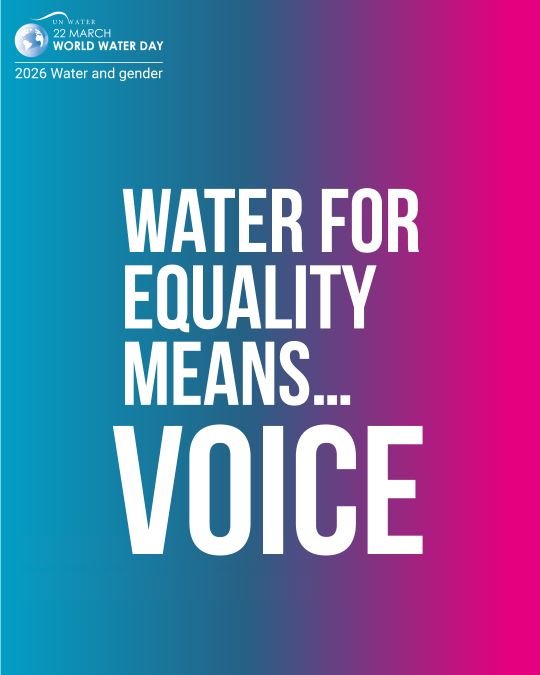
💧World Water Day: Why Access to Water Strengthens Food Security and the Role of Rural Women

Every March 22nd, World Water Day invites us to reflect on a resource essential for life, health, ecosystems, and development. However, when we talk about water, the debate often centers solely on domestic access or infrastructure. While these issues are fundamental, water also sustains something equally vital: the ability to produce food and support entire communities.

In many regions of the world, access to water defines more than just daily life. It also determines who can plant, produce, sustain a family economy, and remain resilient in the face of the climate crisis. In this context, the link between water, agriculture, gender, and food security becomes increasingly evident.

At Agua Segura, we believe that speaking about water security implies looking at the entire system: access to water, watershed management, territorial resilience, and the impact water has on production, local development, and individual opportunities.

🌍 Water as the Foundation of Food Production

Water is one of the most decisive resources for agriculture. Without reliable and sustainable access to water, there is no stable production, no capacity to adapt to droughts, and no resilient food systems.

Globally, the agricultural sector is responsible for approximately 70% of freshwater use, demonstrating just how interconnected water and food production truly are. But this relationship isn’t just about volume; it’s about how water is managed, who can access it, what technologies are available, and how prepared communities are to face water scarcity scenarios.

In a context of increasing water stress, watershed degradation, and climate change, access to water for agriculture becomes a key condition to:

  • Strengthen food security.
  • Improve the climate resilience of production systems.
  • Reduce the vulnerability of rural communities.
  • Expand economic opportunities in agricultural territories.
  • Promote more efficient and sustainable production.

That is why, when we speak of safe water, we are not just talking about human consumption. We are also talking about the possibility of sustaining livelihoods, local production, and territorial development.

👩‍🌾 Women and Water: A Key Relationship for Food Security

The gender dimension is central to this conversation. According to the FAO, women represent approximately 43% of the global agricultural labor force. Furthermore, in many countries, they produce between 60% and 80% of all food.

Despite this fundamental role, rural women continue to face significant barriers in accessing:

  • Land and productive resources.
  • Financing and technical assistance.
  • Agricultural technology.
  • Irrigation systems.
  • Water storage and distribution infrastructure.

When water is scarce, these inequalities deepen. In contexts of water crisis, many women must dedicate more time to securing water for their homes, reducing their production possibilities or facing greater difficulties in sustaining crops, livestock, and family economies. This impacts not only their economic autonomy but also the food security of their communities.

Therefore, improving access to water is also a way to reduce structural gaps and strengthen the role of women in rural production systems.

🌱 Access to Water: Much More Than Resource Availability

Access to water is not limited to the physical existence of the resource. It also implies having the actual conditions to use it safely, efficiently, and sustainably.

This includes:

  • Adequate infrastructure.
  • Efficient irrigation systems.
  • Safe storage.
  • Protection and restoration of watersheds.
  • Local water governance.
  • Training and technical support.

In other words, improving access to water is not just about increasing supply, but about building more resilient, equitable, and sustainable systems.

A key figure highlights this: according to the FAO, if female farmers had the same access to productive resources as men, agricultural production could increase significantly—with estimates in some contexts reaching up to a 30% improvement in productive outcomes.

This data proves something fundamental: investing in water, infrastructure, technology, and equitable access does not just improve resource management. It can also transform production systems, strengthen rural economies, and contribute to greater global food security.

🌎 Water, Climate Resilience, and Rural Development

Climate change is intensifying water-related challenges. Prolonged droughts, extreme rainfall, precipitation variability, and ecosystem degradation are altering how rural communities produce food and manage their territories.

In this scenario, water becomes a decisive factor for climate resilience. When a community has access to safe water, adequate irrigation, efficient practices, and strengthened local governance, it improves its capacity to:

  • Adapt to periods of scarcity.
  • Sustain agricultural production.
  • Reduce losses.
  • Protect their livelihoods.
  • Make decisions based on information and planning.

For this reason, water is also an opportunity: an opportunity to build more resilient territories, more stable rural economies, and communities better prepared for climate uncertainty.

💧 Water Security with a Territorial and Social Focus

At Agua Segura, we work with the conviction that water security is not built through infrastructure alone. It requires an integrated approach that coordinates: Water, Production, Territory, Community, Education, Sustainability, and Equity.

Every watershed has its own dynamics, challenges, and opportunities. Therefore, solutions must be designed from the territory up, with local participation and a focus on measurable impact. When access to water improves, we are protecting more than just a resource; we are strengthening the possibilities to produce, sustain local economies, reduce inequalities, and build a more resilient future.

🌍 World Water Day: A Date to Expand the Conversation

World Water Day, commemorated every March 22nd, is an opportunity to remember that water is not just a natural resource: it is the foundation of life, health, production, and development.

It is also an opportunity to expand the conversation. To talk about water is to talk about food security, rural women, climate resilience, sustainable watershed management, and opportunities for communities.

Because when water is missing, it doesn’t just affect daily consumption. It weakens production systems, deepens inequalities, and limits people’s ability to build a better future. Conversely, when access to water improves, communities are strengthened, production is protected, and real conditions for a fairer and more sustainable development are created.

This March 22nd, we reaffirm one conviction: water also sustains communities, and guaranteeing its access is a key condition for food security and the resilience of our future.

Share

Dvigi: Ultrafiltration Technology for a Healthier and More Sustainable Future

Gisella Djenderedjian – General Manager of Dvigi.

Access to safe drinking water remains one of the most urgent challenges of the 21st century. Although it may seem like a guaranteed right, over 2.2 billion people worldwide lack secure access to water, and this has devastating consequences, especially in rural communities.

According to the World Health Organization (WHO), more than 485,000 people die each year from diarrheal diseases linked to the consumption of contaminated water. This reality hits women and children hardest, as they are often primarily responsible for collecting water in rural areas. This task not only exposes them to physical risks but also keeps them away from educational and work opportunities, perpetuating cycles of poverty and inequality.

Accessible Technology to Improve Water Security

In this scenario, technology presents itself as a fundamental ally in the fight to guarantee water security. In particular, ultrafiltration systems have consolidated as an effective, sustainable, and low-cost solution to improve access to water and sanitation in contexts where water infrastructure is limited or nonexistent.

This technology allows the removal of bacteria, viruses, and sediments without the need for electricity or chemicals, making it a viable tool for vulnerable communities. Furthermore, it contributes to improving water quality, which is vital for preventing waterborne diseases and improving overall well-being.

How Ultrafiltration Works

Ultrafiltration is a purification process that uses membranes with extremely small pores to remove contaminants from water. In the case of purifiers developed by Dvigi, this system is combined with activated carbon and sediment filters, achieving complete purification without removing essential minerals from the water.

“Our purifiers combine ultrafiltration technology with activated carbon and sediment filters, eliminating impurities and improving water taste. We want to be part of the solution to the global water problem,” explains Gisella Djenderedjian, General Manager of Dvigi.

These systems are designed to be simple to install, easy to maintain, and durable, making them especially suitable for communities that do not have constant access to technical services or infrastructure.

A Sustainable Approach with Community Impact

Beyond its efficiency, Dvigi’s technology has a clear focus on sustainability. By not requiring electrical energy or generating polluting waste, it aligns with principles of water conservation and sustainable water management.

In collaboration with Agua Segura, Dvigi works on filter implementation projects in rural communities across Latin America. These initiatives not only improve access to safe drinking water but also strengthen the social fabric through:

  • Awareness workshops on responsible water use.
  • Training in hygiene and healthy habits (WASH).
  • Training for the use and maintenance of the systems.
  • Promotion of corporate water responsibility by technology provider companies.

Each project is conceived as part of a comprehensive approach that prioritizes community education and long-term sustainability.

Community Projects with Real Impact

The community water projects in which Dvigi participates are designed to generate a transformative effect. Daily access to safe water implies a radical change in health, development, and life opportunities in rural communities.

Furthermore, by freeing women and girls from the responsibility of fetching water, greater access to education and economic participation is enabled, contributing to gender equality.

These projects also reinforce the communities’ resilience to the water crisis, which intensifies with phenomena such as droughts, extreme rainfall, or contamination of surface sources.

Complement to Ecosystemic Strategies

Although ultrafiltration technology operates at the household level, it is also part of a broader approach that recognizes the importance of protecting water sources. That is, it is not enough to purify water at the end of the process: it is also essential to take care of what happens in the natural environment.

Therefore, Agua Segura articulates this technological solution with other nature-based solutions for water strategies, such as:

  • The restoration of aquatic ecosystems.
  • The recharge of aquifers through soil conservation.
  • The protection of watersheds.
  • The improvement of agricultural practices to prevent contamination.

These approaches mutually reinforce each other: while the environment is preserved, immediate tools are provided to ensure safe consumption in homes.

Technology with Purpose

“Our commitment is to improve the quality of life in the regions that need it most, using sustainable technology that transforms access to water,” says Djenderedjian.

Dvigi’s mission is clear: to make access to safe water not a privilege, but a right accessible to everyone. Each installed filter represents an opportunity to break the cycle of disease and exclusion.

In contexts where investment in traditional infrastructure takes years or is unfeasible, these technologies represent immediate, effective, and low-environmental-impact solutions for household water replenishment.

Conclusion: Innovation for the Right to Water

The water crisis demands multiple responses, from ecosystem restoration to the development of appropriate technologies for each reality. Dvigi’s experience demonstrates that social and technological innovation can be part of a comprehensive, people-centered solution.

Ultrafiltration systems not only purify water: they open doors to health, education, and community development. In partnership with organizations like Agua Segura, this technology transforms into a tool to build a fairer, more resilient, and healthier future for all.

World Environment Day: Why Plastic Is Also a Water Crisis

Every June 5th, the world pauses to acknowledge something that should be self-evident: the planet we inhabit has limits. World Environment Day, led by the United Nations Environment Programme (UNEP), is an opportunity to bring the most urgent environmental challenges onto the agenda and call for collective action.

This year, at Agua Segura, we want to address a connection that often goes unnoticed: the relationship between plastics and the water crisis. A relationship that is not metaphorical. It is chemical, ecosystemic and deeply territorial.

Plastic Does Not Disappear. It Fragments and Reaches Our Water

When plastic is not properly managed, it does not disappear. It breaks down into increasingly smaller particles — known as microplastics — which end up in rivers, watersheds, aquifers and oceans. According to UNEP data, between 9 and 14 million tons of plastic enter the ocean every year. But the problem does not begin or end at sea.

Microplastics have been found in drinking water sources, agricultural soils, fish tissue and human blood. They affect aquatic biodiversity, disrupt the natural cycles of ecosystems and compromise the water quality that entire communities depend on to live, produce and develop.

The plastic crisis and the water crisis are not two separate problems. They are two symptoms of the same model of production and consumption that ignores the natural limits of the planet.

Water Security and Biodiversity: An Interdependent System

At Agua Segura we work with this reality on the ground every day. We know that water security cannot be guaranteed by infrastructure alone. It depends on healthy ecosystems, functional watersheds, soils with strong infiltration capacity and communities with the ability to care for and manage the resource.

When ecosystems become contaminated — by plastics, agrochemicals or industrial waste — that chain breaks down. Wetlands lose their retention capacity. Degraded soils no longer filter as they once did. Communities that depend on surface or groundwater sources become vulnerable.

That is why talking about the environment on June 5th also means talking about water. And talking about water means talking about the natural systems that sustain it: forests, wetlands, soils, rivers and aquifers. All of them threatened, among other things, by plastic pollution.

What Can Companies Do?

Organizations have a role that cannot be delegated. Not only because plastic and water are part of their value chains, but because they have the capacity to scale solutions that reach far beyond their own operations.

This year, together with Unplastify, we developed a series of special proposals for corporate teams looking to engage with this agenda in a concrete, meaningful and transformative way:

Inspirational talk: a awareness session on the impact of plastics on water, nature and communities. Ideal for building internal awareness and opening sustainability conversations within teams.

Solutions design workshop: a participatory session to co-create concrete responses to plastic and water challenges. An activity that combines creativity, collaboration and purpose.

Clean-up day: a collective action experience in contact with urban nature. Because change is also built with your hands.

These proposals are not just team-building activities. They are opportunities for organizations to integrate the environmental agenda from within — with teams that understand the problem, commit to solutions and build a culture of sustainability.

June 5th Is a Date. The Commitment Is Permanent

World Environment Day serves an important purpose: it makes the crisis visible. But the environmental crisis has no expiration date and cannot be resolved with a single awareness event. It requires strategic decisions, sustained investment and the willingness to change production and consumption models that have decades of inertia behind them.

At Agua Segura we believe that companies that understand this have a real competitive advantage: they build resilience before scarcity forces them to. They design solutions before regulators require them. They generate value for their territory before social conflict demands it.

Plastic in water is not just an environmental problem. It is an indicator of how an organization relates to the ecosystem it depends on. And changing that is possible, measurable and necessary.

Does Your Company Want to Activate Environment Day With Real Impact?

Together with Unplastify we design tailored proposals for teams that want to go beyond communication and connect with concrete environmental action. Talks, workshops and clean-up days designed to generate awareness, creativity and commitment.

If you are interested in exploring how we can support your organization this June 5th — and beyond — reach out to coordinate a call. We are here to help you design a water and environmental impact strategy that makes sense for your company and your territory.

Contact us at aguasegura.com and let’s talk.

Bringing Companies on Board the Circular Economy Train

Manuel Sauri – CEO of Agua Segura

At Agua Segura, we develop, manage, and implement water footprint mitigation projects across the continent. We’ve engaged with dozens of new communities and launched nature-based solutions and WASH (Water, Sanitation, and Hygiene) projects that have positively impacted thousands of families in the region.

For our team, the right to safe water is the driving force that pushes us to keep expanding our horizons and finding solutions to a problem that knows no borders. The water supply crisis affects nearly every corner of the planet and has been identified as the fourth greatest risk to society over the next decade. Food security, access to healthcare, soil and groundwater contamination, and the destruction of productive ecosystems are just some of the alarm bells ringing as we view the world through the lens of the “climate crisis.”

That’s why at Agua Segura, we insist on changing the way we approach the challenges of a development model that emphasizes the transformative opportunity of investing in green solutions. There’s no need to wait for change to happen elsewhere, at another time, or within large institutions. Any company that invests in water can generate a positive impact on its business model by increasing productivity, reducing commercial risks, developing secure supply chains, and strengthening both its social license to operate and its reputation.

This is the core of our company: getting global companies on board the water economy train by advising, supporting, and adapting impact programs to address the specific challenges each company faces. The power of our project lies in these strategic alliances, which help shape the society we want to live in—a world where everyone feels responsible for water and its use. Only then will it be a right accessible to all, enabling communities to thrive in safe ecosystems, while the private sector becomes a driving force for sustainable transformation and a leader in environmental stewardship.

This cooperation is already underway. The relationship between corporations and companies specializing in solutions to the socio-environmental crisis we inhabit is growing ever closer and more prosperous. Numerous projects are embracing this new understanding of the economy, where there is no business unless it is sustainable.

This overarching approach guides our strategic mission, for which we work every day, offering local solutions to global problems. We believe it sets a clear path toward reinventing the world we want to live in.

How to Measure Your Environmental Footprint to Make Better Decisions: The Value of Digitalizing Water, Energy, and Waste Consumption

How to Measure Your Environmental Footprint to Make Better Decisions: The Value of Digitalizing Water, Energy, and Waste Consumption

Sustainability is no longer just about commitments or declarations. Today, companies need reliable data to understand their environmental impact, identify opportunities for improvement, and make strategic decisions that generate measurable results.

In this context, measuring the environmental footprint has moved beyond a reporting exercise to become a management tool. Understanding how an organization consumes water, energy, and resources — and how it generates waste — makes it possible to turn information into concrete actions that reduce costs, lower risks, and strengthen competitiveness.

At Agua Segura, we believe that environmental management begins with knowledge. That is why we developed, together with Unplastify, the Environmental Footprint Tool: a platform that allows organizations to digitalize consumption data, simulate scenarios, and design personalized strategies to improve their environmental performance.

Environmental management starts with data

Many companies know how much they pay for water, electricity, or waste management, but few have an integrated view of how those consumption levels impact their costs, operations, and sustainability goals.

A lack of consolidated information often makes it difficult to answer fundamental questions such as:

  • Where are the greatest savings opportunities?
  • What impact would adopting new technologies have?
  • How would costs change in response to new regulations or tariff variations?
  • Which projects generate the highest environmental and economic return?

Answering these questions requires up-to-date information, comparable indicators, and tools that allow different scenarios to be analyzed before investing.

What is the Environmental Footprint Tool?

The Environmental Footprint Tool is a platform designed to help organizations measure, analyze, and optimize their environmental performance through data-driven management.

The tool integrates three core dimensions:

  • Water consumption
  • Energy consumption
  • Waste management

Based on this information, it enables organizations to build a continuous operational diagnosis and identify concrete improvement opportunities.

More than a dashboard of indicators, it functions as a decision-support system.

Digitalizing to manage better

One of the main challenges in sustainability is that many decisions are still made reactively.

Digitalizing consumption makes it possible to move from an approach based on estimates to continuous management, where information becomes a competitive advantage.

The Environmental Footprint Tool enables organizations to:

  • digitalize water, energy, and waste consumption data;
  • benchmark performance against references drawn from a proprietary database;
  • detect economic and operational savings opportunities;
  • access AI-powered recommendations to guide decision-making.

This information helps prioritize actions and accelerates the implementation of improvements with measurable impact.

Simulating scenarios before investing

One of the platform’s most valuable features is the ability to run simulations.

Before implementing a solution, organizations can analyze different scenarios by considering variables such as:

  • regulatory changes;
  • cost variations;
  • adoption of new technologies;
  • consumption reduction strategies.

The system also estimates the investment required and the direct and indirect savings associated with each alternative.

This reduces uncertainty and helps prioritize projects with the greatest environmental and financial impact.

From data to implementation

Measuring is only the first step.

The real value emerges when information is transformed into concrete projects.

That is why Agua Segura supports organizations throughout the entire process:

  • identifying opportunities;
  • designing solutions;
  • selecting and coordinating suppliers;
  • overseeing implementation;
  • measuring and reporting the impact achieved.

This comprehensive approach turns environmental strategy into verifiable results.

Water, energy, and waste: an integrated perspective

Traditionally, these resources have been managed separately.

However, there is growing evidence that they form part of the same system.

Reducing water consumption can lower energy use. Optimizing processes can simultaneously reduce waste and costs. Implementing efficient solutions can generate environmental and economic benefits at the same time.

An integrated perspective therefore makes it possible to identify opportunities that often go unnoticed when each indicator is analyzed in isolation.

Sustainability also drives efficiency

Companies today face new challenges:

  • increasing regulatory pressure;
  • more demanding ESG objectives;
  • growing expectations from investors and consumers;
  • the need to reduce operating costs;
  • risk management related to water and climate change.

Having tools that make it possible to measure, benchmark, and project scenarios helps organizations respond to these challenges with objective information.

Sustainability moves beyond being solely an environmental goal to become a tool for business efficiency and resilience.

Technology for better environmental management

Digital transformation is also reaching the management of natural resources.

Tools like the Environmental Footprint Tool allow organizations to evolve from reactive management to preventive management, grounded in indicators and evidence.

This supports organizations in:

  • improving environmental performance;
  • reducing costs;
  • optimizing investments;
  • strengthening their ESG strategy;
  • advancing toward more sustainable production and operating models.

From commitment to action

Sustainability begins when decisions can be measured.

Digitalizing consumption, understanding the impact of operations, and evaluating different scenarios makes it possible to move from diagnosis to action with greater speed and precision.

At Agua Segura, we believe the future of environmental management will depend increasingly on the ability to turn data into decisions — and decisions into positive impact.

The Environmental Footprint Tool was developed precisely with that goal in mind: to help organizations convert information into concrete solutions and move toward more efficient, resilient, and sustainable management.

World Environment Day: Why Plastic Is Also a Water Crisis

Every June 5th, the world pauses for a moment to remember something that should be self-evident: the planet we inhabit has limits. World Environment Day, led by the United Nations Environment Programme (UNEP), is an opportunity to put the most urgent environmental challenges on the agenda and call for collective action.

This year, at Agua Segura, we want to highlight a connection that often goes unnoticed: the relationship between plastics and the water crisis. A relationship that is not metaphorical. It is chemical, ecosystemic, and deeply territorial.

Plastic doesn’t disappear. It breaks down and reaches the water

When plastic is not properly managed, it doesn’t disappear. It fragments into increasingly smaller particles — known as microplastics — that end up in rivers, watersheds, aquifers, and oceans. According to UNEP data, between 9 and 14 million tons of plastic enter the ocean every year. But the problem doesn’t start or end at sea.

Microplastics have been found in drinking water sources, agricultural soils, fish tissue, and human blood. They affect aquatic biodiversity, disrupt the natural cycles of ecosystems, and compromise the quality of water that entire communities depend on to live, produce, and develop.

The plastic crisis and the water crisis are not two separate problems. They are two symptoms of the same production and consumption model that ignores the natural limits of the planet.

Water security and biodiversity: an interdependent system

At Agua Segura, we work with this reality on the ground every day. We know that water security cannot be guaranteed by infrastructure alone. It depends on healthy ecosystems, functioning watersheds, soils that absorb water effectively, and communities with the capacity to care for and manage this resource.

When ecosystems become contaminated — with plastics, agrochemicals, or industrial waste — that chain breaks down. Wetlands lose their retention capacity. Degraded soils no longer filter as they once did. Communities that rely on surface or groundwater sources are left exposed.

That is why talking about the environment on June 5th is also talking about water. And talking about water means talking about the natural systems that sustain it: forests, wetlands, soils, rivers, aquifers. All of them threatened, among other things, by plastic pollution.

What can companies do?

Organizations have a role that cannot be delegated. Not only because plastic and water are part of their value chains, but because they have the capacity to scale solutions that go beyond their own operations.

This year, together with Unplastify, we developed a series of special proposals for corporate teams looking to engage with this agenda in a concrete, meaningful, and transformative way:

Inspirational talk: a awareness session on the impact of plastics on water, nature, and communities. Ideal for building internal awareness and opening conversations about sustainability within teams.

Solution design workshop: a participatory dynamic for co-creating concrete responses to plastic and water challenges. An activity that combines creativity, collaboration, and purpose.

Clean-up day: a collective action experience in contact with urban nature. Because change is also built with our hands.

These proposals are not just team-building activities. They are opportunities for organizations to integrate the environmental agenda from within, with teams that understand the problem, commit to the solution, and build a culture of sustainability.

June 5th is a date. The commitment is permanent

World Environment Day serves an important function: it raises visibility. But the environmental crisis has no expiration date and cannot be resolved with a single awareness event. It requires strategic decisions, sustained investment, and the willingness to change production and consumption models that have carried decades of inertia.

At Agua Segura, we believe that companies that understand this have a real competitive advantage: they build resilience before scarcity forces them to. They design solutions before regulators require them. They generate value for their territory before social conflict demands it.

Plastic in water is not just an environmental problem. It is an indicator of how an organization relates to the ecosystem it depends on. And changing that is possible, measurable, and necessary.

Does your company want to activate Environment Day with real impact?

Together with Unplastify, we design tailored proposals for teams that want to go beyond communication and connect with concrete environmental action. Talks, workshops, and clean-up days designed to build awareness, creativity, and commitment.

If you’re interested in exploring how we can support your organization this June 5th — and beyond — reach out to schedule a call. We’re here to help you design a water and environmental impact strategy that makes sense for your company and your territory.

Contact us at aguasegura.com and let’s talk.

#WorldEnvironmentDay #Plastics #WaterSecurity #WaterStewardship #Sustainability #ESG #AguaSegura #Environment #SDG6 #Biodiversity

World Environment Day: Why Plastic Is Also a Water Crisis